Advanced submarine suddenly vanished after making disturbing discovery in unchartered waters
Advanced submarine suddenly vanished after making disturbing discovery in unchartered waters

In early 2024, an international team of scientists exploring the icy waters beneath Antarctica’s Dotson Ice Shelfencountered one of the most perplexing mysteries in modern ocean research. Their autonomous submarine, “Ran,” vanished without a trace, just after making a disturbing discovery—unknown underwater structures that challenge our current understanding of the region.
This baffling disappearance has left scientists grappling with the risks and mysteries of Antarctica’s unexplored depths. Did the submarine collide with an undiscovered geological formation? Was it affected by anomalous oceanic conditions? Or did it encounter something entirely beyond our knowledge?

“Ran”—The Submarine That Explored Antarctica’s Hidden World
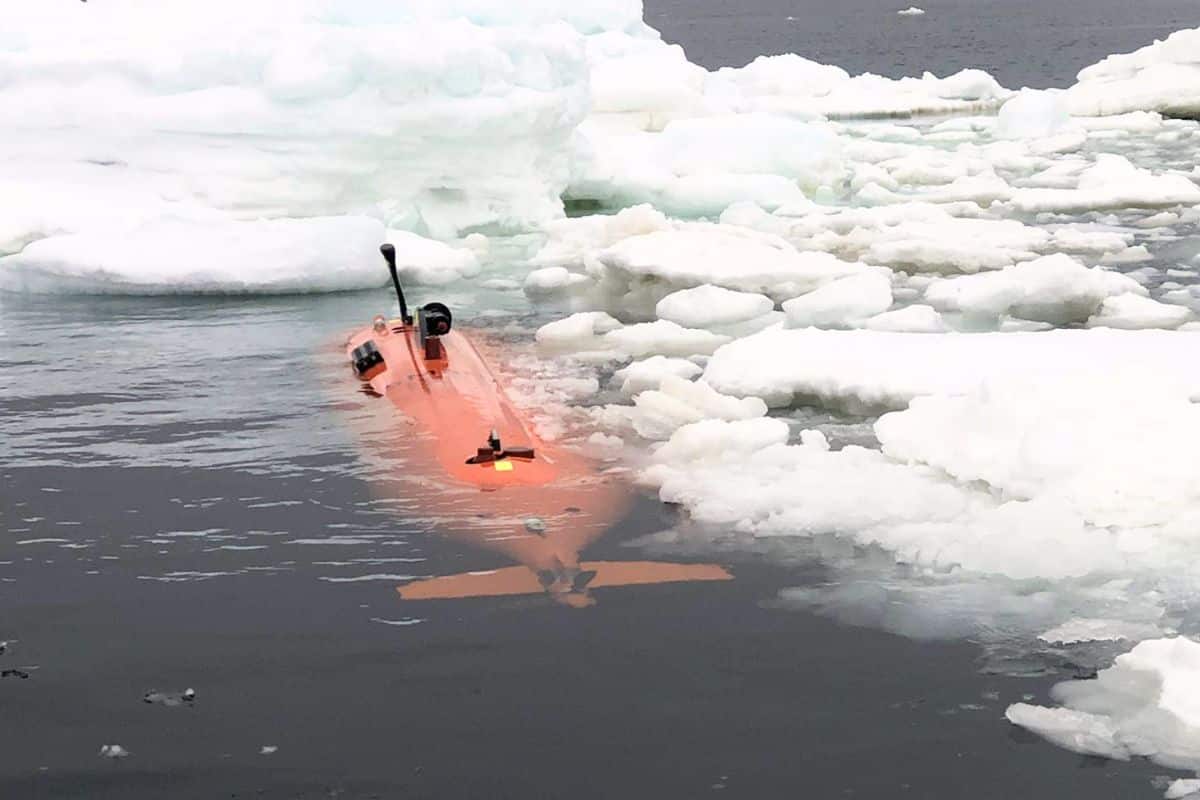
The missing vehicle, “Ran,” was a state-of-the-art, 20-foot-long autonomous submarine, equipped with multibeam sonar and advanced sensors designed to function in the most extreme conditions on Earth. Since 2022, the submarine had been instrumental in providing groundbreaking insights into how Antarctic glaciers interact with deep ocean currents, helping researchers understand the impact of climate change on global sea levels.
Led by renowned oceanographer Anna Wallin, the expedition aimed to explore the seafloor beneath the Dotson Ice Shelf, a region largely unknown to science. Previous missions had already revealed teardrop-shaped formations created by ocean currents, providing valuable clues about how glacial melt is accelerating.
However, Ran’s final dive would reveal something far more puzzling—and its disappearance only deepened the mystery.

What Did “Ran” Discover Before It Vanished?
On January 20, 2024, during a critical deep-sea mission, “Ran” identified significant variations in glacial melt rates, providing some of the most detailed data yet on the influence of the modified Circumpolar Deep Water (mCDW)—a key factor in Antarctica’s melting ice shelves.
But that wasn’t all. As it navigated nearly 620 miles beneath the ice, the submarine detected unknown underwater formations, structures so unusual that they didn’t match any previously recorded geological or oceanic patterns.
Moments later, its connection to the research team was abruptly lost. Despite intensive recovery efforts, the submarine was never found.
How Does a Submarine Simply Disappear?
Theories surrounding the disappearance of “Ran” range from technical failures to encounters with unknown forceslurking beneath the Antarctic ice.
Collision With an Uncharted Structure
- Given the strange formations detected just before “Ran” went silent, some experts believe it may have struck an underwater ridge or submerged ice formation.
Extreme Ocean Conditions
- Antarctica’s powerful undercurrents and shifting glacial melt patterns could have caused an unexpected pressure collapse or an entrapment scenario.
Unusual Marine Life Interference
- Some researchers speculate that seals or other large marine animals—known to be curious about underwater equipment—could have interacted with the submarine in an unforeseen way.
An Anomalous Event?
- Given Antarctica’s unexplored depths, could “Ran” have encountered something unknown to science? Some researchers hesitate to dismiss the possibility that unrecorded geological or environmental forcesmay have played a role.
Oceanographer Anna Wallin, devastated by the loss of the vehicle, stated:
“The disappearance of ‘Ran’ is a stark reminder of how little we understand about this vast and unexplored underwater world. Nevertheless, we remain committed to our mission of studying the impact of climate change and protecting our planet.”
What Lies Beneath Antarctica’s Ice?
The loss of “Ran” highlights both the risks and rewards of deep-sea exploration in Antarctica, a place where technology, nature, and the unknown collide. While climate change continues to accelerate Antarctic ice melt, discoveries like glacial erosion patterns and hidden ocean currents remain crucial for predicting future sea level rise.
However, the disappearance of “Ran” also raises larger questions—how much do we really know about the depths of Antarctica’s oceans? What other hidden geological structures, ancient relics, or unknown environmental phenomena could be lurking beneath its ice-covered waters?
One thing is certain—the mysteries of Antarctica are far from solved, and the disappearance of “Ran” only adds another layer to the enigmatic, uncharted world beneath our planet’s coldest continent.


Comments
Post a Comment