NASA Discovers Mysterious Zebra-Striped Rock on Mars

In a remarkable discovery, NASA's Perseverance rover has identified an unusual black-and-white striped rock on Mars, nicknamed "Freya Castle." This finding has captivated scientists and space enthusiasts alike, offering potential insights into the Red Planet's geological history.

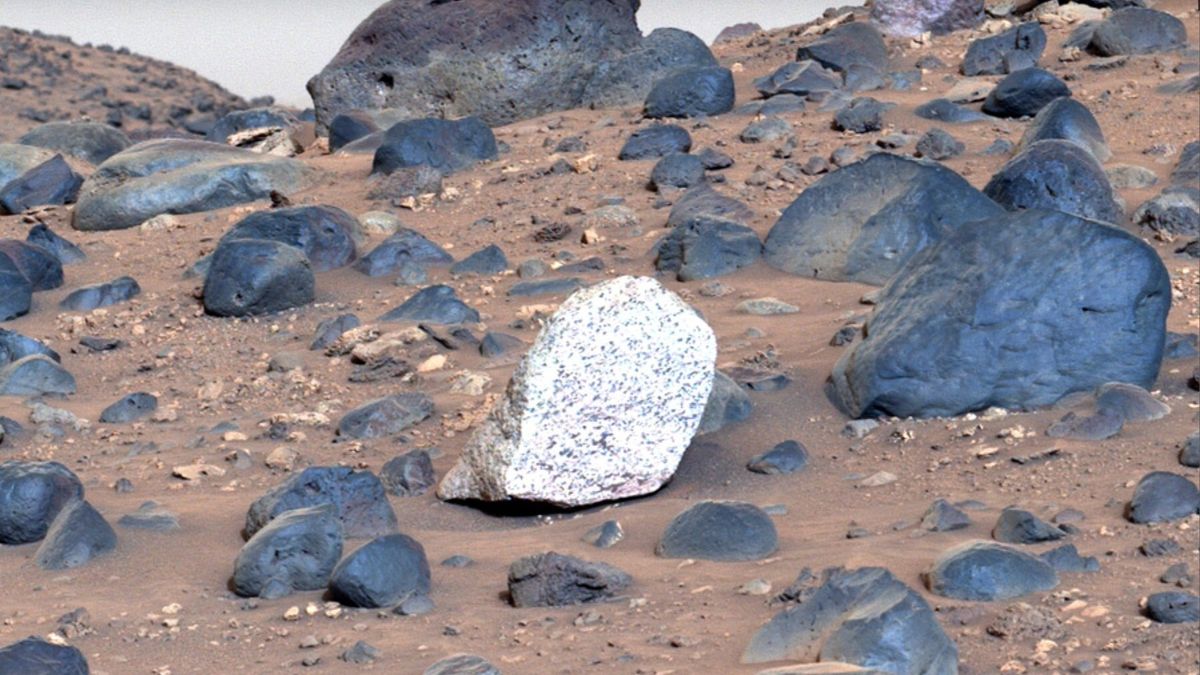
On September 13, 2024, during its ascent of the Jezero Crater's inner slopes, Perseverance's Mastcam-Z camera captured images of a distinctive rock measuring approximately 20 centimeters (8 inches) across. This rock, characterized by alternating dark and light stripes reminiscent of Earth's metamorphic formations, stands out starkly against the typical Martian terrain. The science team informally named it "Freya Castle."

The unique pattern of Freya Castle has led scientists to hypothesize about its origins. Preliminary interpretations suggest that igneous or metamorphic processes may have formed the rock's distinctive stripes. Igneous rocks result from the cooling and solidification of molten material, while metamorphic rocks arise from the transformation of existing rocks under intense heat and pressure. The presence of such a rock in Jezero Crater, primarily known for its sedimentary deposits, hints at a more complex geological history than previously understood.

Freya Castle's solitary presence amidst unremarkable pebbly terrain raises questions about its journey to the current location. One theory posits that the rock originated from higher elevations and rolled downhill, possibly due to past seismic activity or meteor impacts. As Perseverance continues its climb, scientists are eager to locate the original outcrop of this rock type, which could provide deeper insights into Mars' geological processes and history.
This discovery adds to a series of intriguing findings by Perseverance. Earlier in 2024, the rover encountered a rock dubbed "Cheyava Falls," notable for its "leopard spot" patterns. These spots, containing iron and phosphate, are similar to features on Earth that can fossilize microbes, suggesting potential signs of ancient Martian life. While these findings are not definitive evidence of past life, they underscore the importance of continued exploration and sample analysis.
The Perseverance mission aims to uncover signs of ancient microbial life and understand Mars' past habitability. Discoveries like Freya Castle and Cheyava Falls highlight the planet's diverse geological features and the dynamic processes that have shaped its surface. As the rover progresses, it will continue to analyze intriguing formations, collect samples, and pave the way for future missions that may return these samples to Earth for comprehensive study.
In summary, the identification of Freya Castle offers a tantalizing glimpse into Mars' complex geological narrative. Each discovery by Perseverance brings us closer to understanding the Red Planet's history and its potential to have harbored life.
Comments
Post a Comment