AFRICA is Splitting: Scientists Found the Sixth Ocean Beneath Earth's Surface

Our planet's hydrosphere, encompassing the Pacific, Atlantic, Indian, Southern, and Arctic Oceans, is well-known. However, recent scientific discoveries suggest the existence of a vast reservoir of water deep within Earth's mantle, potentially rivaling the volume of all surface oceans combined. Simultaneously, geological processes on the surface, particularly in Africa's Afar region, indicate the gradual formation of a new ocean, which could eventually reshape the continent's geography.

The Hidden Ocean Beneath Earth's Surface
The Earth's interior is composed of several layers: the crust, the mantle, and the core. Between the upper and lower mantle lies the transition zone, spanning depths of approximately 410 to 660 kilometers. This zone is characterized by immense pressures and temperatures, leading to the formation of unique minerals.
One such mineral is ringwoodite, a high-pressure phase of olivine. Laboratory experiments have demonstrated that ringwoodite can incorporate hydroxide ions (a constituent of water) into its crystal structure, suggesting that it can store significant amounts of water. This has led scientists to hypothesize that the transition zone could contain a substantial quantity of water, potentially equivalent to or exceeding the volume of Earth's surface oceans. This water is not in liquid form but is bound within the crystal lattices of minerals like ringwoodite.
Supporting this hypothesis, a study published in Science Advances in 2017 inferred that the mantle transition zone might be nearly water-saturated, with ringwoodite containing 1 to 2 weight percent water. This finding implies that the transition zone could play a crucial role in Earth's deep water cycle, influencing mantle dynamics, volcanic activity, and plate tectonics.
Formation of a New Ocean in Africa
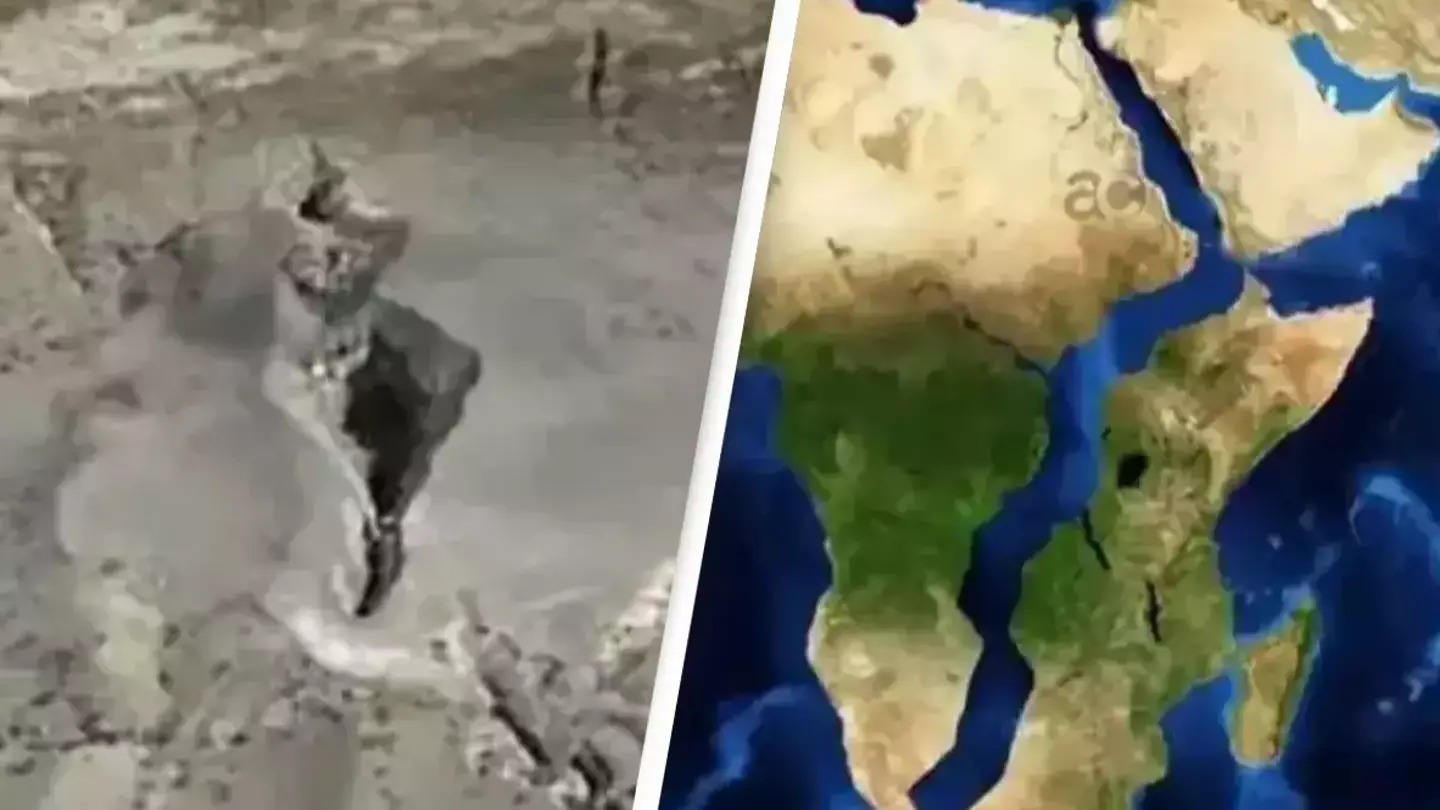
On the Earth's surface, tectonic activities continue to reshape continents. The Afar region in northeastern Ethiopia is a unique geological setting where three tectonic plates—the African (Nubian), Somali, and Arabian plates—converge at a point known as the Afar Triple Junction. This area is characterized by active rifting, where the Earth's lithosphere is being pulled apart.
Geologists have observed that the Somali and Nubian plates are gradually diverging. This rifting process is creating a series of fractures and faults, leading to the formation of a rift valley. Over geological timescales, continued divergence is expected to cause the land between these plates to sink and be inundated by the ocean, resulting in the formation of a new ocean basin. This process is estimated to take between 5 to 10 million years.
The emergence of a new ocean would have profound implications for the African continent, effectively splitting it into two landmasses. This geological transformation would not only alter the continent's physical geography but also impact local ecosystems, climate patterns, and human populations.
Implications of These Discoveries
The concept of a vast, hidden reservoir of water deep within Earth's mantle challenges our traditional understanding of the planet's water distribution and its geological processes. If the transition zone is indeed water-rich, it could influence mantle convection, the mechanism driving plate tectonics, and, consequently, seismic and volcanic activity. This deep water cycle may also play a role in the long-term regulation of Earth's surface water, impacting sea levels and climate over geological timescales.
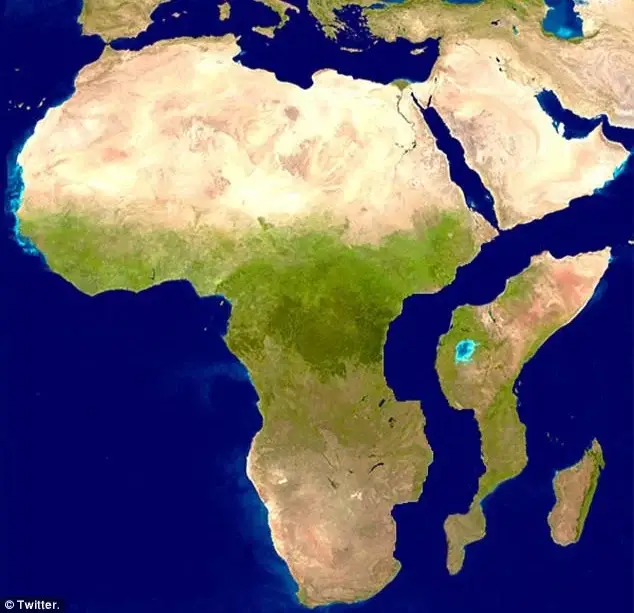
Simultaneously, the ongoing rifting in the Afar region serves as a contemporary example of how dynamic Earth's surface is. The gradual formation of a new ocean basin highlights the ever-evolving nature of our planet's crust, driven by the underlying mantle dynamics. Studying these processes provides valuable insights into the mechanisms of continental drift, the formation of ocean basins, and the complex interactions between Earth's interior and surface.
In conclusion, the discovery of potential vast water reserves deep within Earth's mantle, coupled with the observable tectonic activities leading to the formation of a new ocean in Africa, underscores the dynamic and interconnected nature of our planet's systems. These findings not only enhance our understanding of Earth's geological processes but also prompt a reevaluation of the intricate relationships between the planet's interior and its surface.


Comments
Post a Comment