Archaeologists found massive 12,500-year-old ROCK PAINTING that depicts EXTINCT & MYTHICAL creatures

Deep within Colombia's Amazon rainforest lies the Serranía de la Lindosa, a region that has recently unveiled one of the most significant archaeological discoveries of our time. At the Cerro Azul site, archaeologists have documented over 3,200 rock paintings, some dating back approximately 12,500 years. These artworks not only provide a window into the lives of early inhabitants but also depict a range of animals, including species that are now extinct.
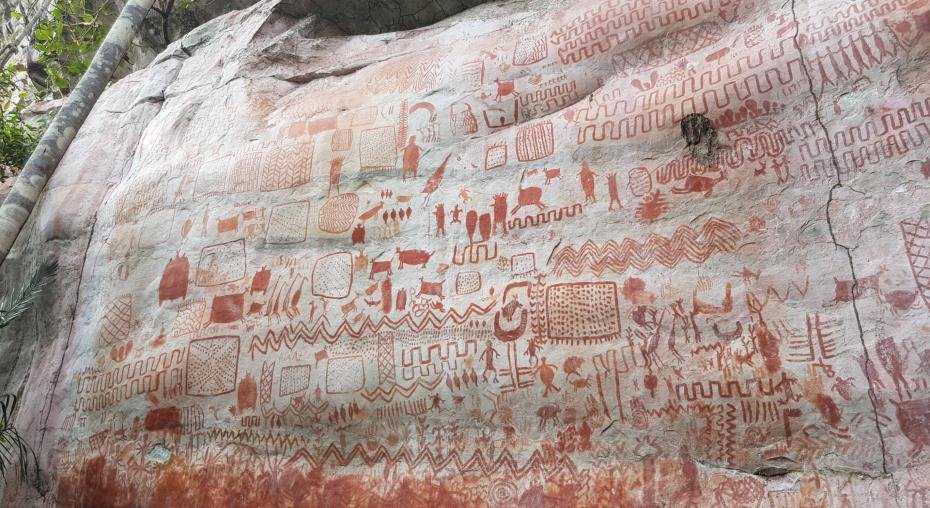
The rock art at Cerro Azul is among the earliest evidence of human presence in western Amazonia. Dr. Mark Robinson, an Associate Professor of Archaeology at the University of Exeter, emphasized the significance of these findings, stating, "These rock art sites include the earliest evidence of humans in western Amazonia."
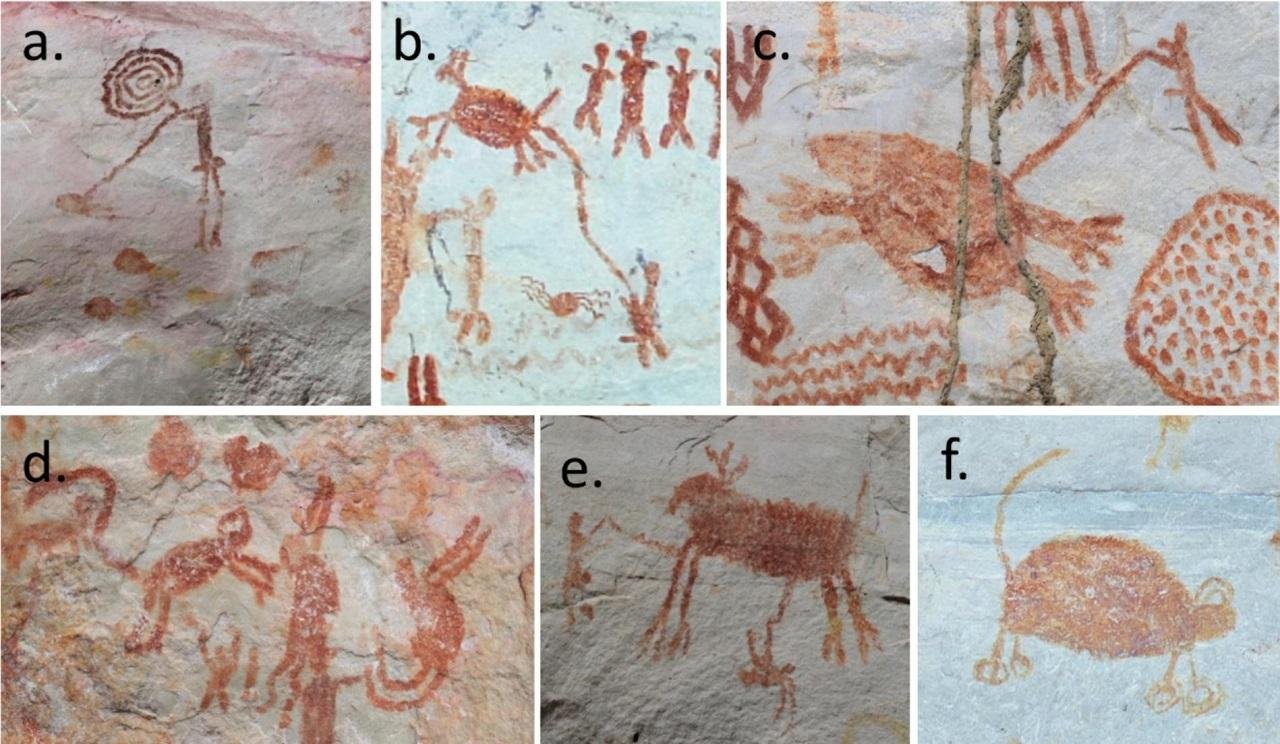
The research team employed drone photogrammetry and traditional photography to catalog 3,223 images, with 58% being figurative. Among these, more than half depicted animals such as deer, birds, peccaries, lizards, turtles, and tapirs. In total, at least 22 different animal species were identified.

Interestingly, the proportions of animal bones found in nearby excavations do not align with the frequency of animals depicted in the art. This suggests that the ancient artists did not simply paint the animals they commonly consumed. The animal bones revealed a varied diet, including fish, small to large mammals, and reptiles such as turtles, snakes, and crocodiles.

Dr. Robinson explained, "The context demonstrates the complexity of Amazonian relationships with animals, both as a food source but also as revered beings, which had supernatural connections and demanded complex negotiations from ritual specialists."
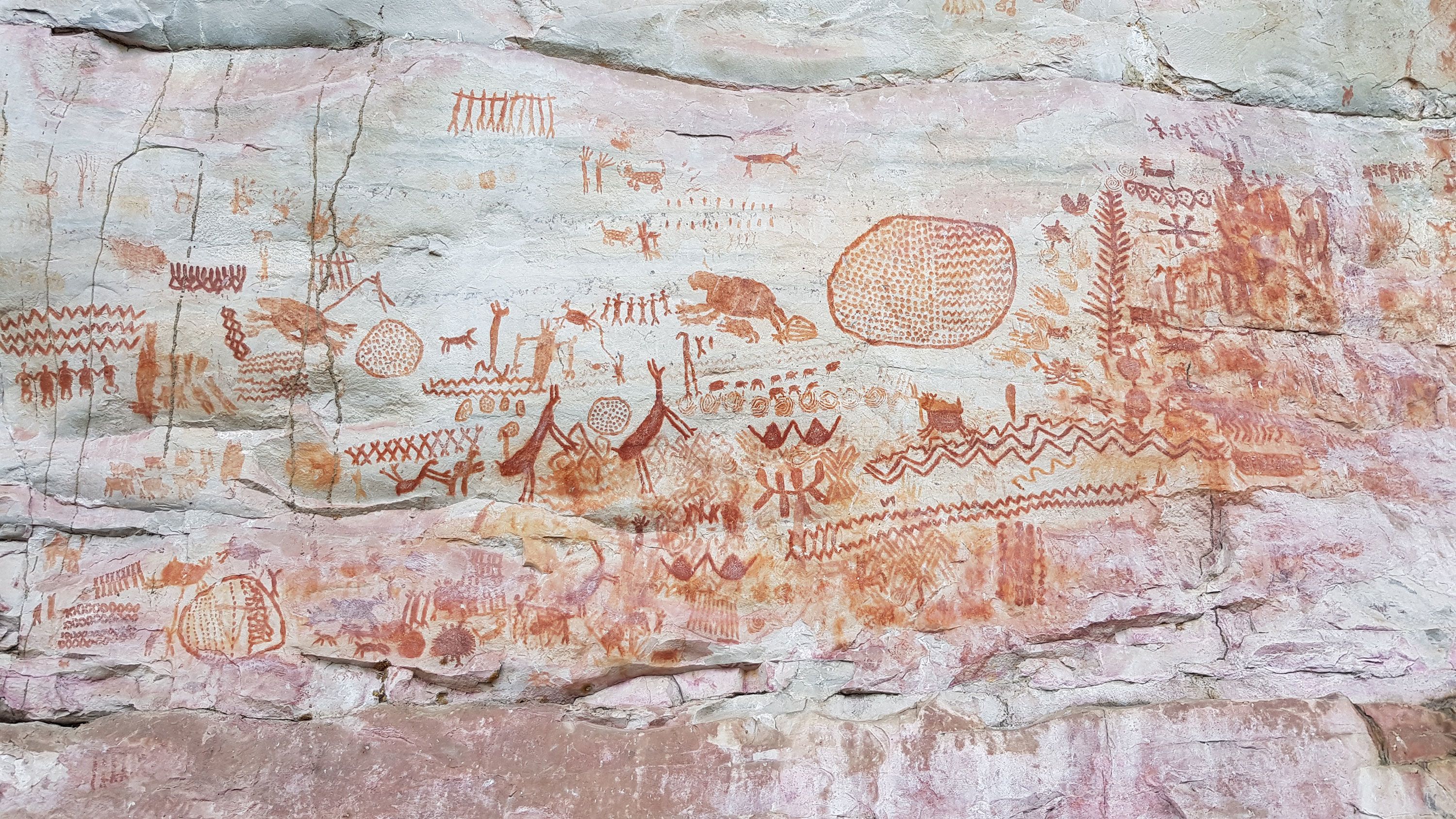
The art also reveals a rich mythology that guided generations of indigenous Amazonians. Some images depict transformations between humans and animals, highlighting a complex belief system. Professor José Iriarte of the University of Exeter noted, "Though we cannot be certain what meaning these images have, they certainly do offer greater nuance to our understanding of the power ... ." He added, "They are particularly revealing when it comes ... ."
Among the 16 panels of ochre drawings at Cerro Azul, six were studied in detail. These ranged from the expansive 40-meter-by-10-meter "El Más Largo," containing over 1,000 images, to the smaller 10-meter-by-6-meter "Principal," which holds 244 images. Many of these images are well-preserved and vividly red.
Despite the abundance of fish remains found in archaeological sites, their depiction in the art is limited, appearing in just two panels in what seem to be fishing scenes. Notably absent are big cats, such as jaguars, despite their significance as apex predators in the region. This absence might indicate a cultural restriction on depicting such powerful animals.
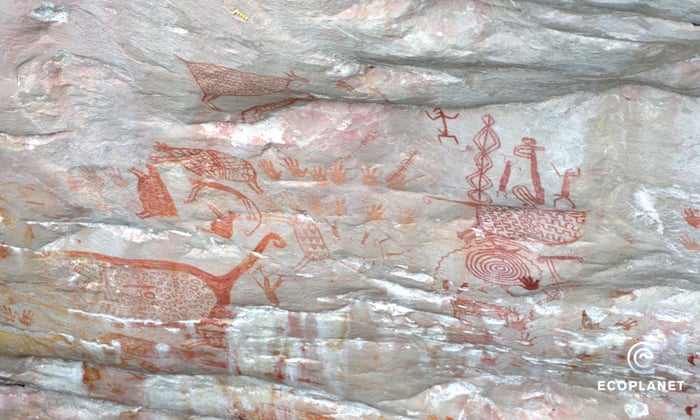
Dr. Javier Aceituno of Universidad de Antioquia commented, "The Indigenous people of Cerro Azul and the surrounding lands hunted and depicted a diverse array of animals from different ecologies – from aquatic fish to arboreal monkeys; terrestrial deer to aerial birds, both nocturnal and diurnal." This broad subsistence strategy involved tracking and hunting animals and harvesting plants from various habitats, including savannahs, flooded forests, and rivers.
By comparing the depicted animals with the remains found, the researchers concluded that rock art was not merely a record of daily life but also a representation of the settlers' spiritual and cultural beliefs. Professor Iriarte concluded, "Our approach reveals differences between what indigenous communities exploited for food and what is conceptually important to represent – and not represent – in art."
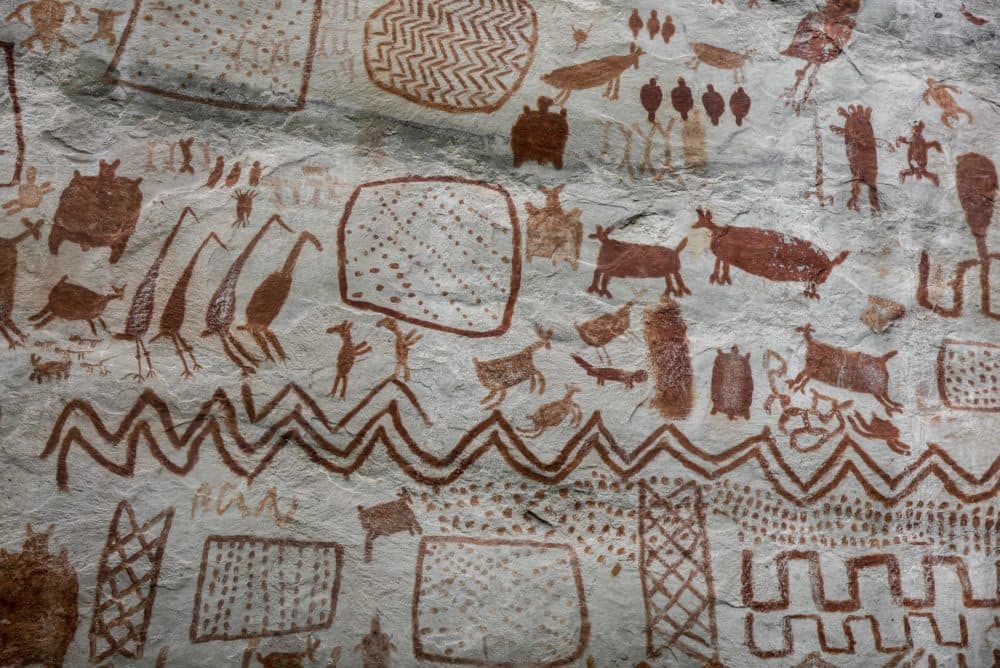
The discovery of these ancient artworks offers profound insights into the lives of early Amazonian inhabitants. The depictions of extinct species suggest that these early settlers coexisted with and possibly hunted these animals, providing valuable information about the region's prehistoric ecology. Moreover, the presence of mythical and transformative imagery indicates a complex belief system that intertwined the natural and supernatural worlds.
The findings at Cerro Azul contribute significantly to our understanding of human history in the Amazon. They highlight the intricate relationships between early humans and their environment, as well as the rich cultural and spiritual lives of these communities. As research continues, these artworks will undoubtedly continue to shed light on the deep history of human habitation in the Amazon rainforest.


Comments
Post a Comment