Missing Plane Finally Landed After 37 Years—What Authorities Found Inside is Beyond Belief


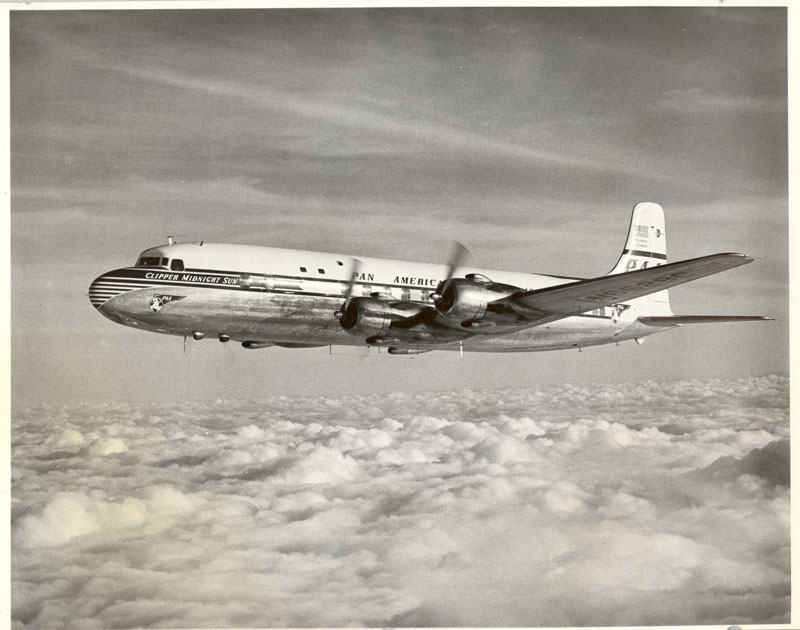
In the annals of aviation history, few mysteries have captured the public’s imagination as vividly as the baffling case of Pan-American Flight 914. On a seemingly ordinary summer day in 1955, a Douglas DC-4 took off from New York City bound for Miami, carrying 57 passengers and an experienced crew. The flight was routine, the skies clear, and all on board expected nothing more than a few hours of comfortable travel. Yet, somewhere over the East Coast, in a matter of moments, the plane vanished from radar without a trace. No distress signal was sent, no warning was given—one moment the aircraft was there, and the next it was gone, leaving families and authorities in shock and despair.

The disappearance of Flight 914 set off an extensive search, with authorities scouring every inch of the intended flight path. For days and then weeks, search and rescue teams combed the vast expanse of the Atlantic Ocean. Despite the enormous resources dedicated to the search, no wreckage or debris was ever found. In time, the grim reality set in: the plane and its 57 passengers had been declared lost. The incident became one of the greatest aviation mysteries of its time, a tragedy that haunted the families of the missing and left investigators with more questions than answers.
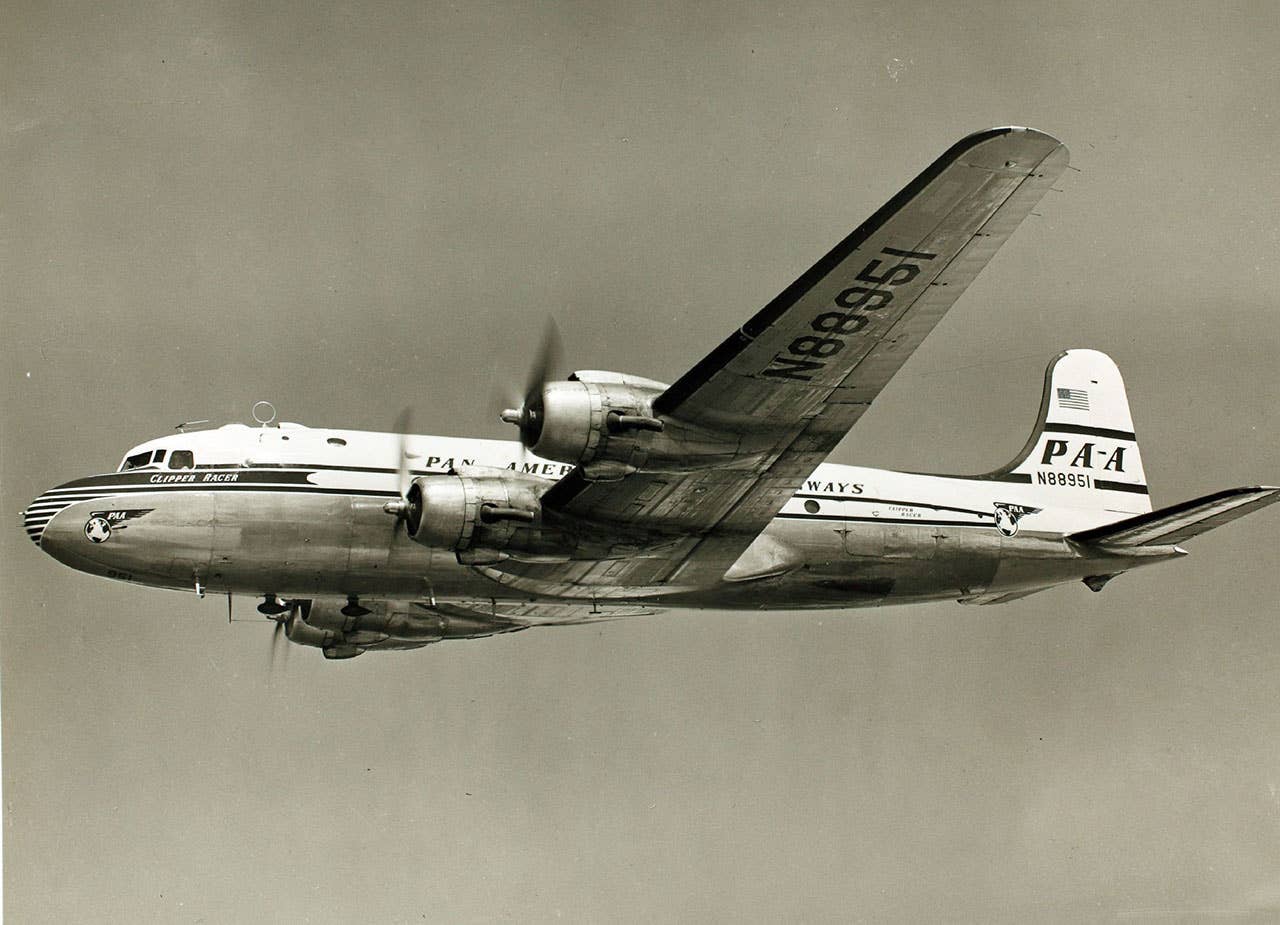
Then, in a twist that seemed more fitting for a science fiction novel than real life, 37 years later an astonishing event occurred. On a warm September morning in 1992, air traffic controllers in Caracas, Venezuela, detected an unidentified aircraft on their radar. The plane appeared suddenly, not following any scheduled route, and its time stamp inexplicably matched the exact date of the original 1955 departure. The controllers, startled by the reappearance, reached out for a response. After a long pause filled with static and uncertainty, the voice of a pilot finally crackled over the communication line. “This is Pan-American Flight 914. Where are we?” he asked, his tone confused and disoriented.
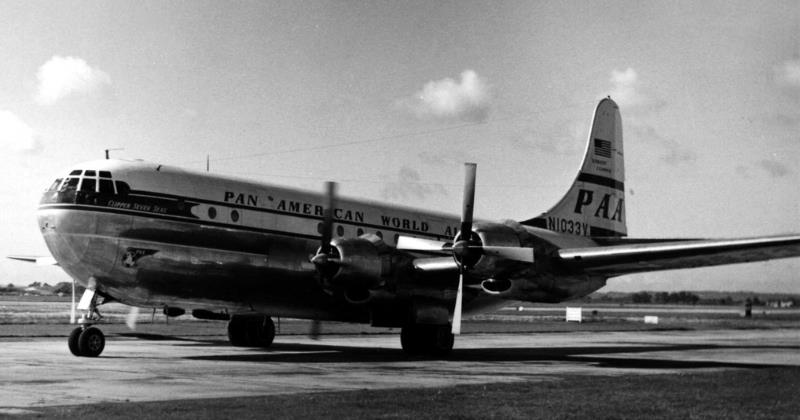
The news spread like wildfire. Eyewitnesses reported that as the mysterious aircraft approached Caracas, it bore unmistakable Pan-American markings. When it landed, the scene was surreal. The control tower and ground staff approached the plane with caution, unsure of what they were witnessing. The passengers, if they were indeed those who had vanished decades earlier, appeared as though they had just awakened from a long sleep. Some described them as disoriented, while others noted that the pilot himself seemed unaware of his off-course location. In a final, perplexing twist, as soon as the plane touched down and brief communications were attempted, the pilot abruptly ordered the engines to start, and the aircraft lifted off again, disappearing into the sky as mysteriously as it had arrived. Radar soon lost track of it, leaving authorities and the public with a cascade of unanswered questions.
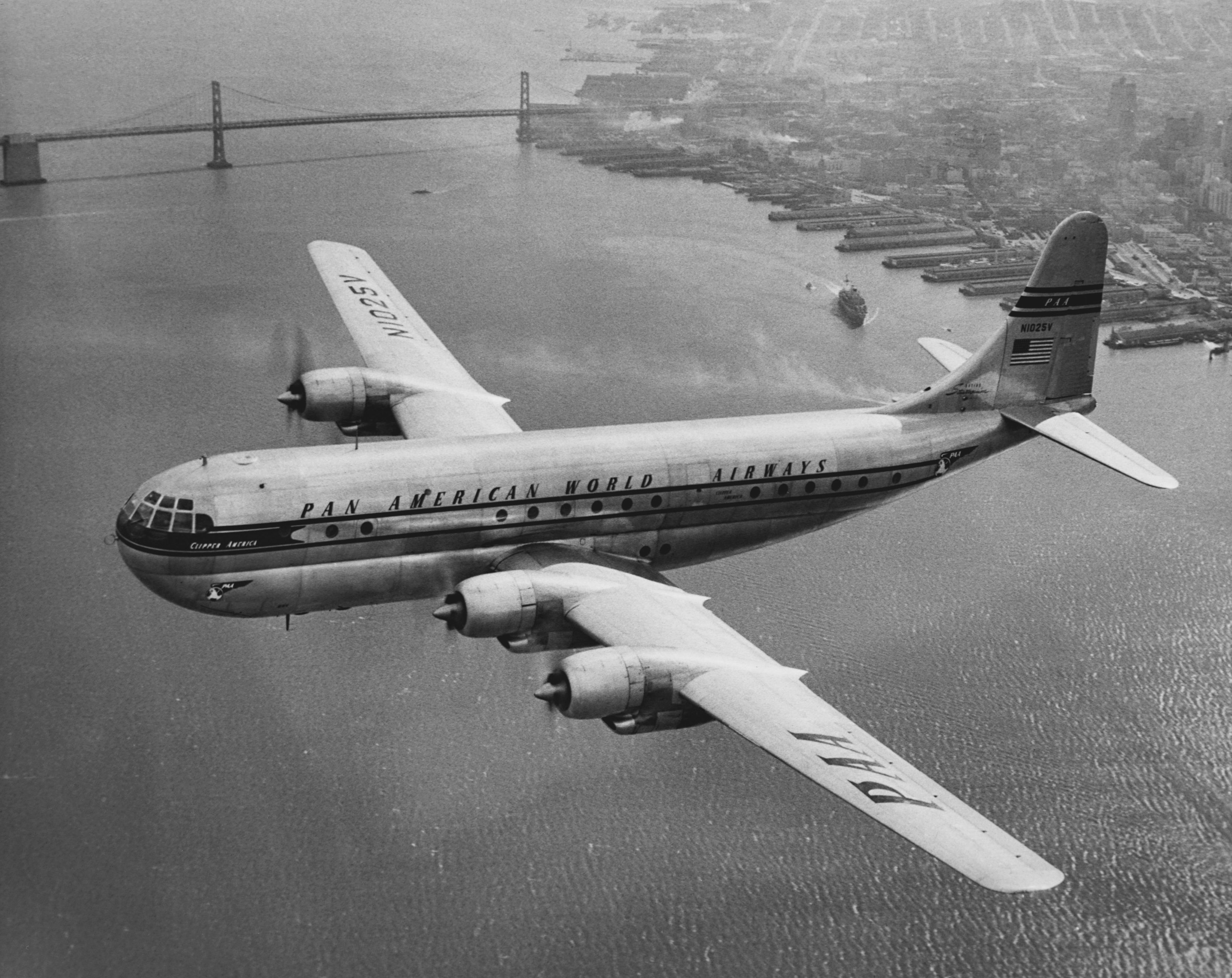
Speculation about the incident ran wild. Theories ranged from the plausible to the fantastical. Some experts suggested that a temporal anomaly—a rift in the space-time continuum—had caused the aircraft to slip through time, only to reappear decades later. Others argued that the incident was reminiscent of the legendary Bermuda Triangle mysteries, where strange forces seemed to defy logic and bend the rules of nature. Skeptics, however, dismissed the entire affair as a modern urban legend, fueled by rumors and embellishments over time. They pointed out that Pan-American Airlines had gone out of business in 1991, a year before the plane’s supposed reappearance in Caracas, and questioned the authenticity of the evidence.
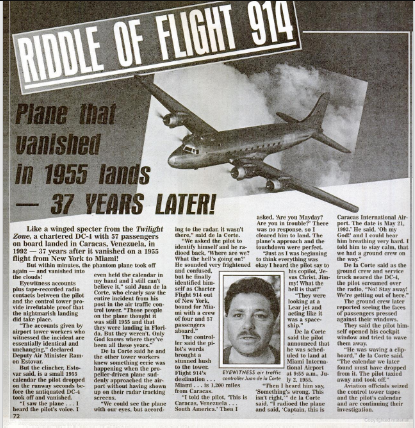
Despite the skepticism, the story of Flight 914 continued to captivate audiences around the world. Documentaries were made, books were written, and debates raged on in scientific journals and online forums alike. Was it possible that an aircraft, along with its passengers and crew, could have somehow traversed through time? Could there be unknown forces at work in the skies that defied our conventional understanding of physics and reality? For many, the idea that the lost flight had reappeared decades later provided a glimmer of hope that even the most perplexing mysteries might one day be solved.
Investigators delved into every conceivable aspect of the case. They reexamined historical radar data, interviewed retired air traffic controllers, and pored over declassified documents in search of any clue that might shed light on the strange phenomenon. While no definitive explanation emerged, a consensus began to form around the possibility of a rare, inexplicable anomaly. Some theorized that a localized temporal distortion might have temporarily halted the plane’s progress, causing it to vanish from modern radar and then reappear in a different era. Others speculated that the plane had encountered a spatial vortex or an electromagnetic anomaly that disrupted its course and interfered with standard communication protocols.
As the investigation deepened, experts in time travel and theoretical physics were drawn into the discussion. They explained that, in theory, if a temporal rift were to occur—a sudden, unpredictable tear in the fabric of time—it might allow an object to be displaced in time, emerging decades later in the same physical space. Although such phenomena remain purely speculative and beyond the realm of proven science, they provided a tantalizing explanation for what many now referred to as the “Flight 914 Anomaly.” The idea that time itself could play tricks on the modern world was both thrilling and unsettling, challenging our most fundamental assumptions about causality and the passage of time.
Meanwhile, the families of the lost passengers were left with a bittersweet mix of hope and sorrow. For decades, they had mourned the disappearance of their loved ones, clinging to the possibility of closure. The sudden reappearance of Flight 914, even if only for a brief moment, stirred deep emotions and reopened old wounds. Some family members saw it as a miracle—a chance to reconnect with those they had thought lost forever—while others were reluctant to believe that the reappearing plane was truly the same vessel that had vanished over half a century ago.
In Caracas, where the mysterious plane briefly touched down, officials scrambled to secure the site and investigate the incident. The reappearance of Flight 914 sent shockwaves through local authorities, who found themselves caught between scientific inquiry and the surreal nature of the event. The pilot’s bewildered question, “Where are we?” resonated in the control tower, leaving officials to wonder whether they were witnessing a genuine anomaly or merely a case of miscommunication. When the aircraft abruptly took off again, the mystery only deepened, with many questioning whether the passengers were even aware of the temporal displacement they had experienced.
In the years following the incident, the story of Pan-American Flight 914 has remained unsolved, its details passed down as one of aviation’s most enduring mysteries. For some, the tale is nothing more than an urban legend, a modern myth born from the confluence of technology, human error, and wild speculation. For others, it is a sobering reminder that the world still holds secrets that defy explanation, that there are forces at work beyond our understanding. The mystery continues to be revisited in documentaries, podcasts, and scientific debates, each new theory adding layers of complexity to an already confounding enigma.
Critics argue that the evidence supporting the reappearance of Flight 914 is circumstantial at best—mere whispers of radio static, blurry radar images, and conflicting eyewitness accounts that seem too fantastical to be true. They point to the fact that Pan-American Airlines had ceased operations years before the plane’s supposed reappearance, casting doubt on whether any aircraft with authentic Pan-American markings could still be in operation. Yet even these skeptics cannot entirely dismiss the possibility of a genuine anomaly. The incident challenges conventional wisdom and forces us to confront the limits of our scientific knowledge. In a world where technological advancements constantly push the boundaries of what is possible, the mystery of Flight 914 serves as a poignant reminder that some questions may remain forever unanswered.
In the end, the legend of Pan-American Flight 914 endures as a symbol of the unknown—a narrative that encapsulates the awe and terror of a world where time and space can sometimes seem to warp and bend. It is a story that blurs the line between science fiction and reality, inviting us to imagine a universe where the impossible might just be possible. The incident has inspired countless theories and continues to captivate the imagination of people from all walks of life.
For now, the truth behind Flight 914 remains shrouded in mystery. Was it a case of time travel, a fleeting glimpse of a temporal rift, or simply a bizarre misinterpretation of faulty data? While definitive answers elude investigators, the incident has undoubtedly left an indelible mark on aviation history. It challenges us to look beyond the ordinary, to question the very fabric of our reality, and to remain open to the possibility that the world still holds wonders that we have yet to understand.
As the years pass, the story of Flight 914 will likely continue to be revisited, debated, and analyzed by experts and enthusiasts alike. Its legacy, whether as a true anomaly or as an elaborate myth, reminds us that there is still much to learn about the universe and our place within it. In the meantime, the haunting image of a plane disappearing from the sky—57 souls lost in time, only to reappear decades later—continues to inspire both fear and wonder, urging us to keep our eyes on the skies and our minds open to the inexplicable.


Comments
Post a Comment