NASA Discovers a Mysterious New Planet Next to Neptune

In a groundbreaking discovery, astronomers have identified a unique exoplanet, designated WASP-193b, that challenges existing planetary formation theories. This gas giant, located approximately 1,200 light-years from Earth, exhibits an exceptionally low density, comparable to that of cotton candy. The planet's characteristics have intrigued scientists and may provide new insights into planetary science.
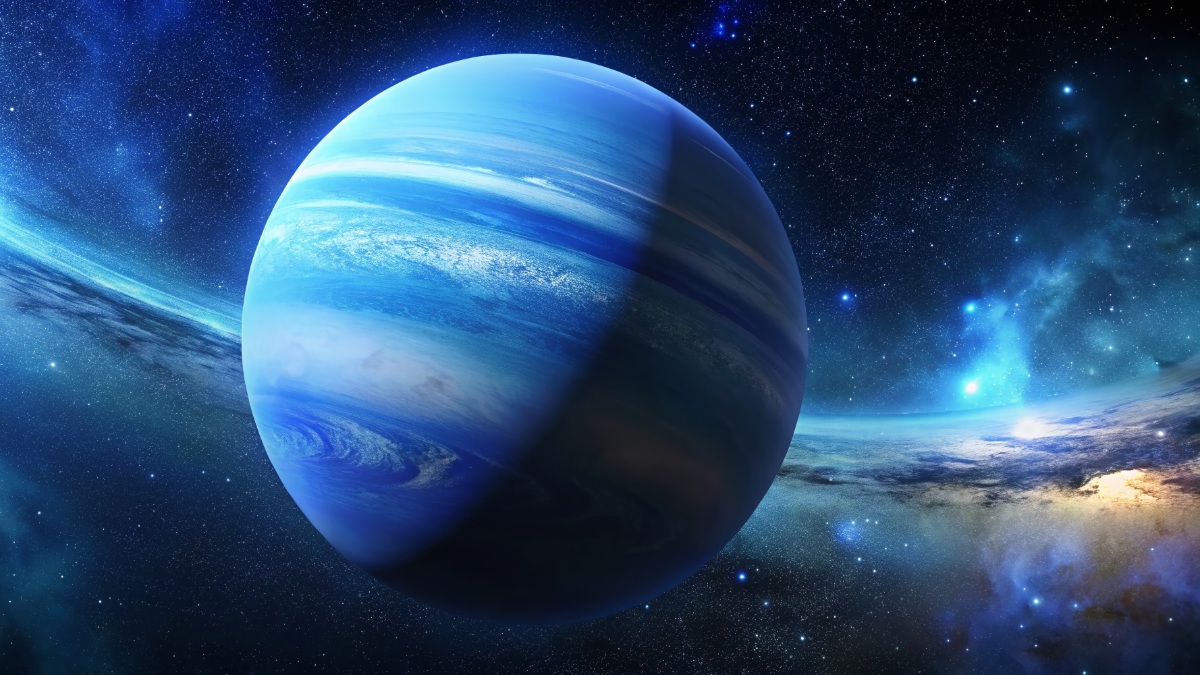
WASP-193b was first detected by the Wide Angle Search for Planets (WASP) collaboration, which utilizes robotic observatories equipped with wide-angle cameras to monitor the brightness of stars and identify potential exoplanets. Subsequent observations and analyses by researchers from the Massachusetts Institute of Technology (MIT), the University of Liège in Belgium, and other institutions have provided detailed insights into this unusual planet.
The exoplanet is approximately 50% larger than Jupiter but possesses only about 14% of Jupiter's mass, resulting in an extremely low density of approximately 0.059 grams per cubic centimeter. For comparison, Jupiter's density is about 1.33 grams per cubic centimeter, and Earth's density is 5.51 grams per cubic centimeter. This makes WASP-193b one of the least dense planets discovered to date, second only to Kepler-51d, a smaller, Neptune-sized exoplanet. The planet orbits an F-type star every 6.2 days at a distance of 0.0676 astronomical units (AU).
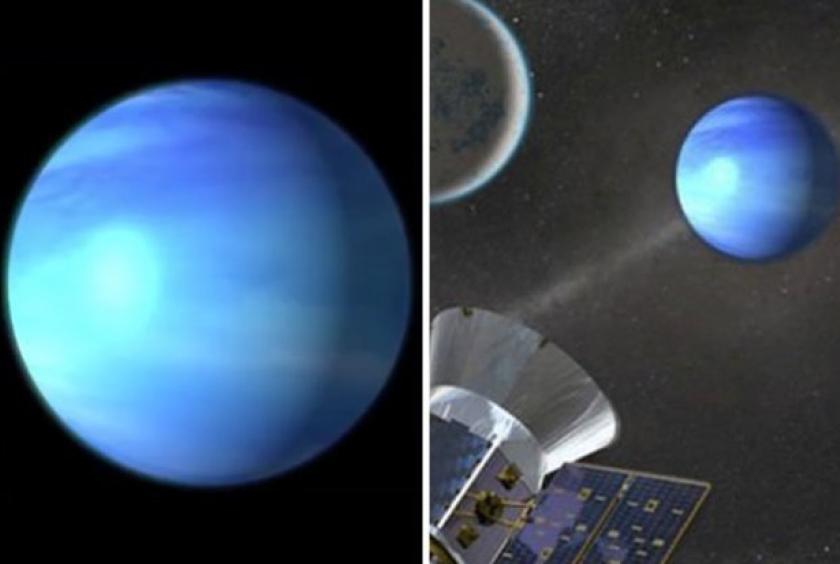
The discovery of WASP-193b poses significant challenges to current models of planetary formation and evolution. Its large size combined with its extremely low density cannot be easily explained by standard models of irradiated gas giants, even under the assumption of a coreless structure. This anomaly suggests that there may be unknown processes at play in the formation of such "puffy" planets.
Dr. Khalid Barkaoui, a postdoctoral researcher at the University of Liège and lead author of the study, emphasized the rarity of finding giant planets with such low density. He noted that for over 15 years, scientists have been puzzled by these "puffy Jupiters," and WASP-193b represents an extreme example of this category.

The unique characteristics of WASP-193b make it an excellent candidate for atmospheric studies. Its extended atmosphere, primarily composed of hydrogen and helium, allows for more light to pass through, facilitating the analysis of its atmospheric composition and structure. Julien de Wit, an assistant professor in MIT's Department of Earth, Atmospheric, and Planetary Sciences, highlighted that studying such planets can provide valuable insights into atmospheric effects and help resolve the mysteries surrounding puffy Jupiters.
While WASP-193b is located far beyond our solar system, its discovery prompts reflection on the characteristics of planets within our own celestial neighborhood. For instance, Pluto, once considered the ninth planet, was reclassified as a dwarf planet in 2006 due to its size and the eccentricity of its orbit. This reclassification underscores the dynamic nature of planetary science and the importance of continuous observation and analysis.

The identification of WASP-193b adds a fascinating chapter to the study of exoplanets, challenging existing paradigms and opening new avenues for research into planetary formation and atmospheric composition. As technology advances and observational techniques improve, the continued study of such unique celestial bodies will enhance our understanding of the universe and the diverse planetary systems it encompasses.


Comments
Post a Comment