Scientists Uncover Critical Flaw in Sea-Level Rise Predictions

Recent research has identified a significant flaw in current sea-level rise predictions, particularly regarding the behavior of temperate glacier ice. A new study published in Science suggests that this type of glacier ice flows more steadily than previously assumed, leading to lower projections for sea-level rise than existing models indicate. The findings challenge a fundamental equation used in glacier dynamics and have major implications for climate models and our understanding of ice movement.

Glaciers consist of different types of ice, each responding uniquely to environmental conditions. Neal Iverson, a distinguished professor emeritus at Iowa State University, explains that some parts of glaciers exist at their pressure-melting temperature, making them soft and watery—much like an ice cube left on a counter. This temperate ice is prevalent at glacier bases and edges, where ice movement is most rapid. However, studying its behavior has been historically difficult, leading researchers to rely primarily on cold ice, which behaves more rigidly, like a frozen ice cube.
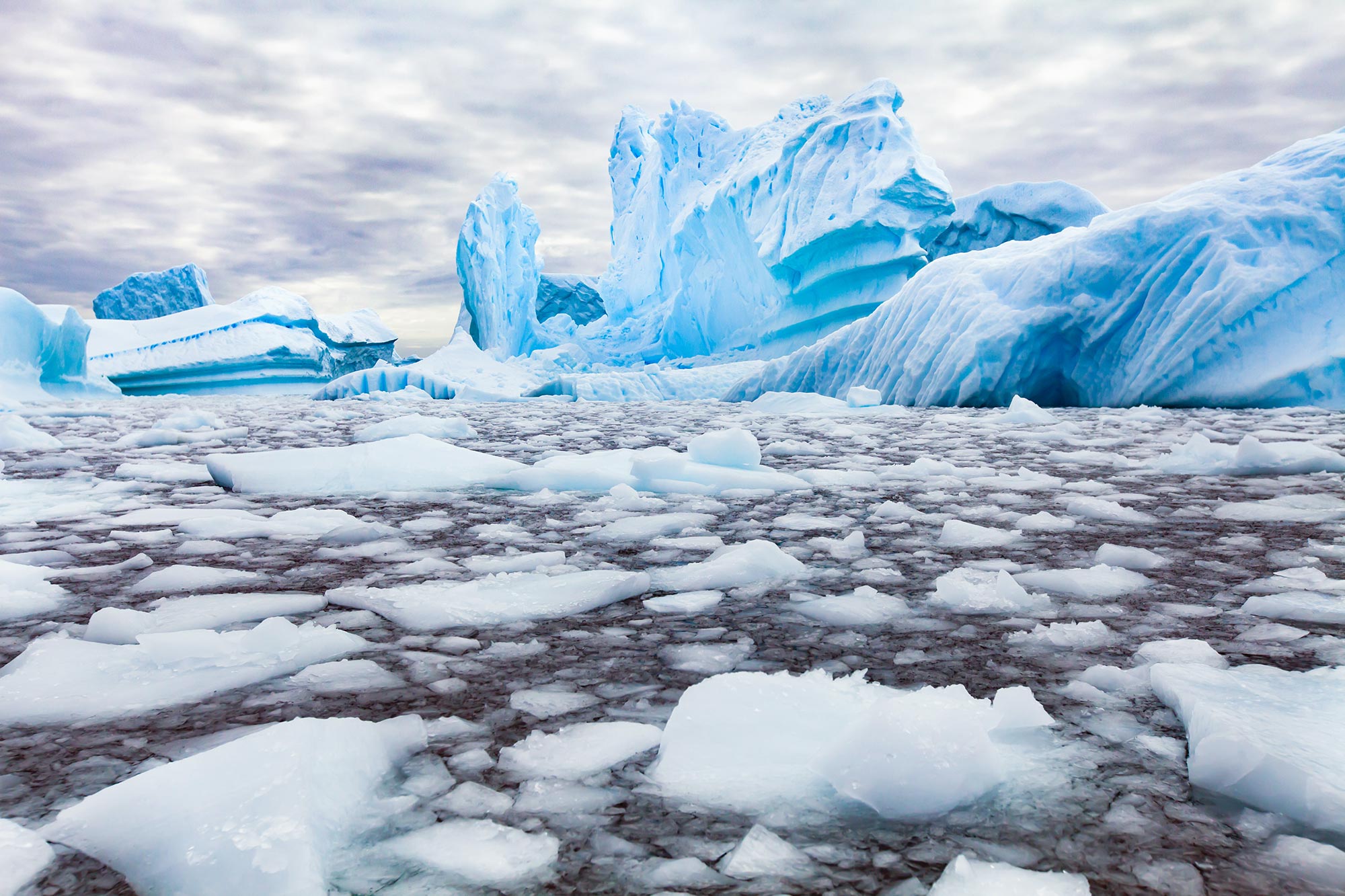
For decades, models predicting glacier flow have been based on Glen’s Flow Law, a key equation used to estimate ice movement. However, this law was derived largely from studies on cold ice, meaning it may not accurately describe how temperate ice behaves. The new research proposes that Glen’s Flow Law requires revision for temperate ice, as the commonly used stress exponent values may overestimate how quickly glaciers will respond to climate change.

The implications of this discovery are profound. Iverson and his colleagues found that using the revised stress exponent in Glen’s Flow Law results in lower estimates of glacier flow acceleration. This suggests that glaciers will contribute less ice to the ocean than previously expected, meaning sea-level rise projections should be adjusted downward. While this does not eliminate the dangers posed by melting ice caps, it offers a more accurate assessment of future changes.
To reach these conclusions, the research team conducted extensive laboratory experiments using a specialized ring-shear device. This machine, operational since 2009 and funded by the National Science Foundation (NSF), was designed to simulate the extreme forces and movements experienced by glacial ice. The experiments aimed to measure the liquid water content in temperate ice, a factor that had not been studied in detail since the 1970s.
Lead researcher Collin Schohn, a former graduate student at Iowa State, carried out six long-term experiments—each lasting six weeks—where he deformed temperate ice at melting temperatures under different stress conditions. The findings provided crucial data on how this type of ice behaves under pressure, revealing a critical flaw in past assumptions about glacier dynamics.

The most surprising result of the study was that temperate ice deforms in a linear fashion relative to applied stress, contradicting the long-standing assumption that stress would exponentially increase deformation rates. This means that the stress exponent in Glen’s Flow Law should be adjusted from the widely accepted values of 3 or 4 to a much lower value of 1.0. The new data indicates that temperate ice behaves far more predictably under normal glacier conditions than previously believed.
The significance of this discovery extends beyond laboratory experiments. Warm glacier ice plays a crucial role in sea-level rise, as it is often found near the bases and edges of fast-moving glaciers. Accurately modeling its behavior is essential for forecasting future changes in global ice sheets, particularly in Antarctica and Greenland, where massive glaciers are in retreat.

Conducting research on temperate ice was not without its challenges. Unlike cold ice, temperate ice is softer, more fluid, and difficult to work with in controlled conditions. Lucas Zoet, a geoscience professor at the University of Wisconsin-Madison and co-author of the study, noted that previous research focused almost exclusively on cold ice due to these difficulties. Overcoming these obstacles required nearly a decade of perseverance and continuous refinement of experimental techniques.

Iverson reflected on the long and complex journey to reach these findings, emphasizing the importance of dedication in scientific discovery. The process involved numerous setbacks, but the results now provide a more accurate frameworkfor understanding glacier movement and its role in sea-level rise.
This groundbreaking research offers a new path forward in climate science. By refining how we model glacier behavior, scientists can develop better predictions and implement more effective strategies to address the ongoing effects of climate change. While sea-level rise remains an urgent concern, this study introduces a crucial correctionthat ensures our understanding of glacier dynamics is based on the most precise and reliable data available.


Comments
Post a Comment