The Magnetic North Pole Just Shifted and It's Moving Faster—Here’s What It Means

Earth’s Magnetic North Pole Is Rapidly Moving—Here’s What It Means for the Future
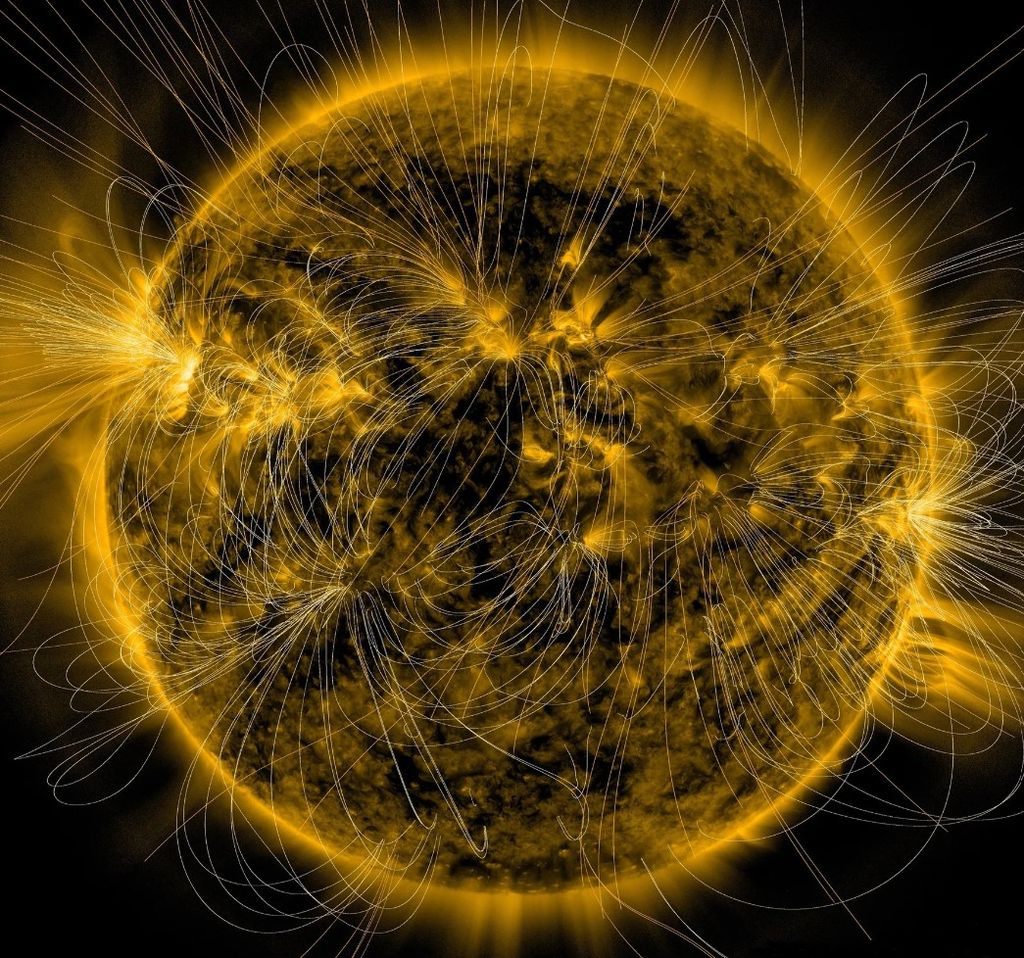
Scientists have just updated the official position of Earth’s magnetic north pole, revealing that it has drifted closer to Siberia, continuing its slow but unpredictable journey across the Arctic. This shift, which happens due to changes in Earth’s molten core, affects everything from GPS navigation to airline flight paths. The latest data confirms that magnetic north is no longer where it was just five years ago, and researchers are still trying to determine why these movements are accelerating and slowing in unusual ways.

Magnetic North Is Not Fixed—And It’s Moving Fast
Unlike the geographic North Pole, which marks a permanent spot at the top of the Earth, magnetic north is constantly in motion. It is determined by Earth’s magnetosphere, a force generated by the churning molten metals in our planet’s outer core. This magnetic field shields Earth from harmful solar radiation, but because the core is always shifting, so is magnetic north.

For centuries, magnetic north moved gradually, typically drifting about 6 miles per year. However, in the 1990s, scientists noticed something strange—magnetic north’s movement had suddenly accelerated to 34 miles per year. By 2019, the changes were so dramatic that scientists had to update the World Magnetic Model (WMM) a year earlier than planned. Now, in 2025, the movement has slowed again to approximately 22 miles per year, but its final trajectory remains uncertain.

How Does This Impact Navigation?
Magnetic north is a crucial reference point for aviation, military operations, and GPS systems. The World Magnetic Model (WMM), developed by the British Geological Survey and the National Oceanic and Atmospheric Administration (NOAA), helps ensure accurate navigation for planes, ships, and even smartphones.
With the recent shift, airlines and militaries are now updating their systems to match the new magnetic coordinates. For commercial pilots, even a small drift in magnetic north can cause navigation errors over long distances, requiring regular adjustments to flight paths.
Dr. William Brown, a leading geophysicist at the British Geological Survey, explained:
“Major airlines will update their navigation software across entire fleets, and NATO militaries will need to adjust complex navigation systems. For everyday GPS users, the change is minor, but for precision-based systems, it’s critical.”

Could Magnetic North Suddenly Reverse?
One of the biggest questions scientists are trying to answer is why magnetic north is shifting so unpredictably. In Earth’s history, the magnetic poles have flipped multiple times, a phenomenon known as geomagnetic reversal. The last major flip occurred around 780,000 years ago, and based on historical data, another reversal could happen in the distant future.
If the poles were to suddenly reverse, the impact on technology and wildlife could be enormous. Many species, including birds, sea turtles, and whales, use Earth’s magnetic field to navigate. A sudden shift could disrupt migration patterns, while modern technology like power grids and satellites could experience severe interference due to weakened magnetic protection from solar radiation.
Dr. Arnaud Chulliat, a senior research scientist at NOAA, stated:
“The magnetic field’s rapid changes are a reminder that we do not fully understand its behavior. While a complete reversal likely wouldn’t happen overnight, it would be a challenge for engineers to adapt.”

What’s Next? Monitoring the Future of Magnetic North
Scientists expect that magnetic north will continue drifting toward Russia, but at a slower pace than during its peak movement in the 1990s and early 2000s. The next major update to the World Magnetic Model is scheduled for 2030, unless the field changes dramatically again.
For now, life on Earth continues as usual, but these findings highlight the complex forces at play beneath our feet. Earth’s molten core, which creates the magnetic field, is still a largely mysterious force, and scientists are racing to understand what drives its fluctuations.
One thing is certain—Earth’s magnetic north pole will never stay in one place for long.


Comments
Post a Comment