Where Did Homo Sapiens Go After Leaving Africa? New Study Has an Answer

Our species first emerged in Africa over 300,000 years ago, with a major migration out of the continent occurring around 60,000 to 70,000 years ago. But after leaving Africa, the path taken by these early humans has been a topic of intense debate. A new study now offers a compelling answer, suggesting that these early Homo sapiens lingered for thousands of years in a geographic hub spanning Iran, southeast Iraq, and northeast Saudi Arabia before moving further into Asia and Europe around 45,000 years ago.

Scientists reached this conclusion by analyzing genomic datasets drawn from ancient DNA and modern genetic pools, combined with paleoecological evidence indicating that this region provided an ideal environment for early human populations. Researchers identified this area, part of what is known as the Persian Plateau, as a "hub" where these early humans—likely numbering only in the thousands—thrived before eventually dispersing across the world.

This study, published in Nature Communications, is the first to provide a complete picture of where the ancestors of all non-African humans settled after leaving Africa. Molecular anthropologist Luca Pagani, senior author of the study from the University of Padova, emphasized the significance of this finding, explaining that it fills a critical gap in our understanding of early human migration. Anthropologist Michael Petraglia, co-author and director of the Australian Research Centre for Human Evolution at Griffith University, described the research as an important step in unraveling the mysteries of human evolution and global dispersal.
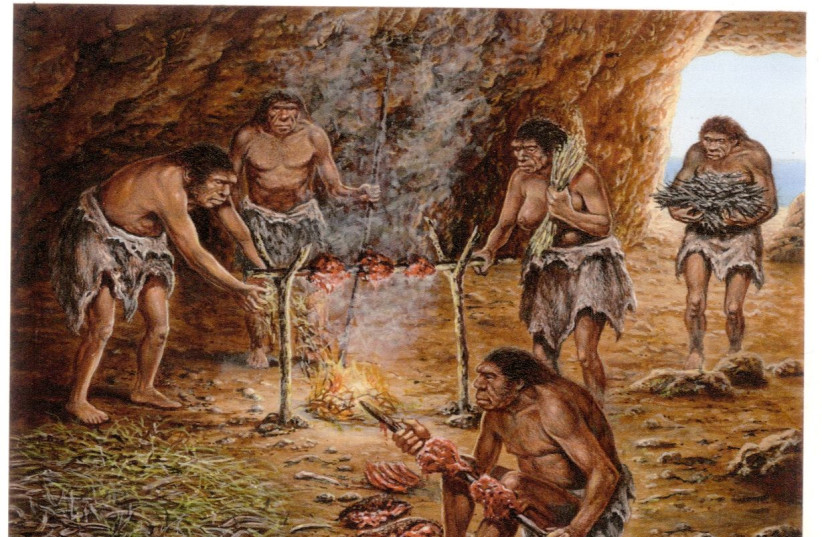
By integrating genetic and paleoecological models, scientists were able to predict the precise location where early human populations first settled after exiting Africa. These hunter-gatherers lived in small, mobile groups, taking advantage of a diverse landscape that included forests, grasslands, and savannahs. This environment fluctuated between arid and wet periods, providing a variety of resources for survival. Archaeological evidence suggests that they hunted wild gazelles, sheep, and goats while also consuming a diet rich in edible plants. Seasonal migration patterns suggest they moved between lowlands in cooler months and mountainous regions in warmer months.
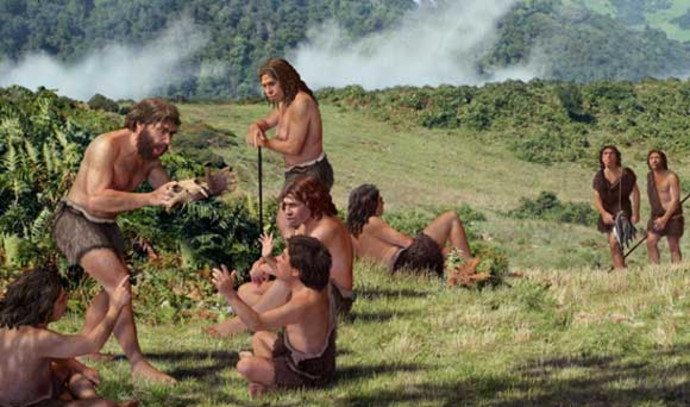
These ancient humans likely had dark skin and dark hair, resembling modern Gumuz or Anuak people from East Africa. Interestingly, the study also found that cave art began appearing soon after these populations left the hub, suggesting that cultural developments, including artistic expression, may have originated during this prolonged settlement period.
The eventual dispersal of these groups from the hub laid the foundation for the genetic divergence between present-day Europeans and East Asians. To reach these conclusions, the research team analyzed modern and ancient genomic data from various populations. The oldest genomes, dating back 45,000 to 35,000 years ago, provided particularly valuable insights. The researchers also developed a method to disentangle the extensive genetic mixing that occurred after humans left the hub, allowing them to pinpoint this pivotal migration point.
Before the major migration 60,000 to 70,000 years ago, earlier small-scale excursions of Homo sapiens out of Africa had taken place, but these appear to have been evolutionary dead ends. Our species was also not the first human lineage to inhabit areas outside Africa. Neanderthals, who lived in the region long before Homo sapiens arrived, contributed small amounts of DNA to modern non-African populations due to ancient interbreeding. Given their presence in the region, the study suggests that the hub may have been the location where early Homo sapiens first interacted with Neanderthals.

This groundbreaking study provides crucial evidence that early human populations did not immediately spread across the world after leaving Africa but instead remained in a concentrated region for thousands of years before their eventual migration into Eurasia. By combining cutting-edge genetic research with paleoecological data, scientists have taken a significant step toward solving one of the greatest mysteries of human history.


Comments
Post a Comment